Quick answer
So you’ve got small brown cockroaches running around the kitchen. In the cupboard, near the fridge, maybe even inside the gas stove. Spraying isn’t going to sort that out, sorry. Those little ones are German cockroaches and they live and breed indoors, and a spray mostly just chases them further back into the wall. What actually works? Gel bait put in the right places, one follow-up visit, and fixing two or three small things in your kitchen that are basically feeding them. That’s it, really. If you want the longer story, read on.
“We’ve sprayed. Twice. They’re still there.”
Honestly we get this call almost every week. Mostly it’s families in flats, Kakkanad, Edappally, Kaloor side. Somebody picks up a can from the supermarket, empties half of it under the sink, and for three or four days, peace. Then one night you open the cupboard for the dosa tawa and, yep, there they are again. Sometimes more than before!
The spray isn’t fake, by the way. Cockroaches are just cleverer than we give them credit for. Spray kills the ones it lands on. The rest sit tight, along with the egg cases they’ve pushed into cracks, and they wait it out. Some of them even start avoiding the sprayed area. And here’s the annoying part, a strong spray can break up a colony that was happily living in one corner and send it into three or four new corners. So now it’s all over the kitchen.
Two kinds of cockroach, two different problems
Most homes in Kerala have one of these, or both, lucky them.
The small brown ones are German cockroaches. Think fingernail size, light brown, two dark stripes just behind the head. You’ll find them wherever it’s warm and there’s food nearby, so behind the fridge motor, inside the base of the mixie, in cabinet hinges, under the stove. And they breed like crazy. One female carries an egg case with thirty-odd eggs and she doesn’t drop it till it’s almost ready to hatch. Which is exactly why spray misses so many of them.
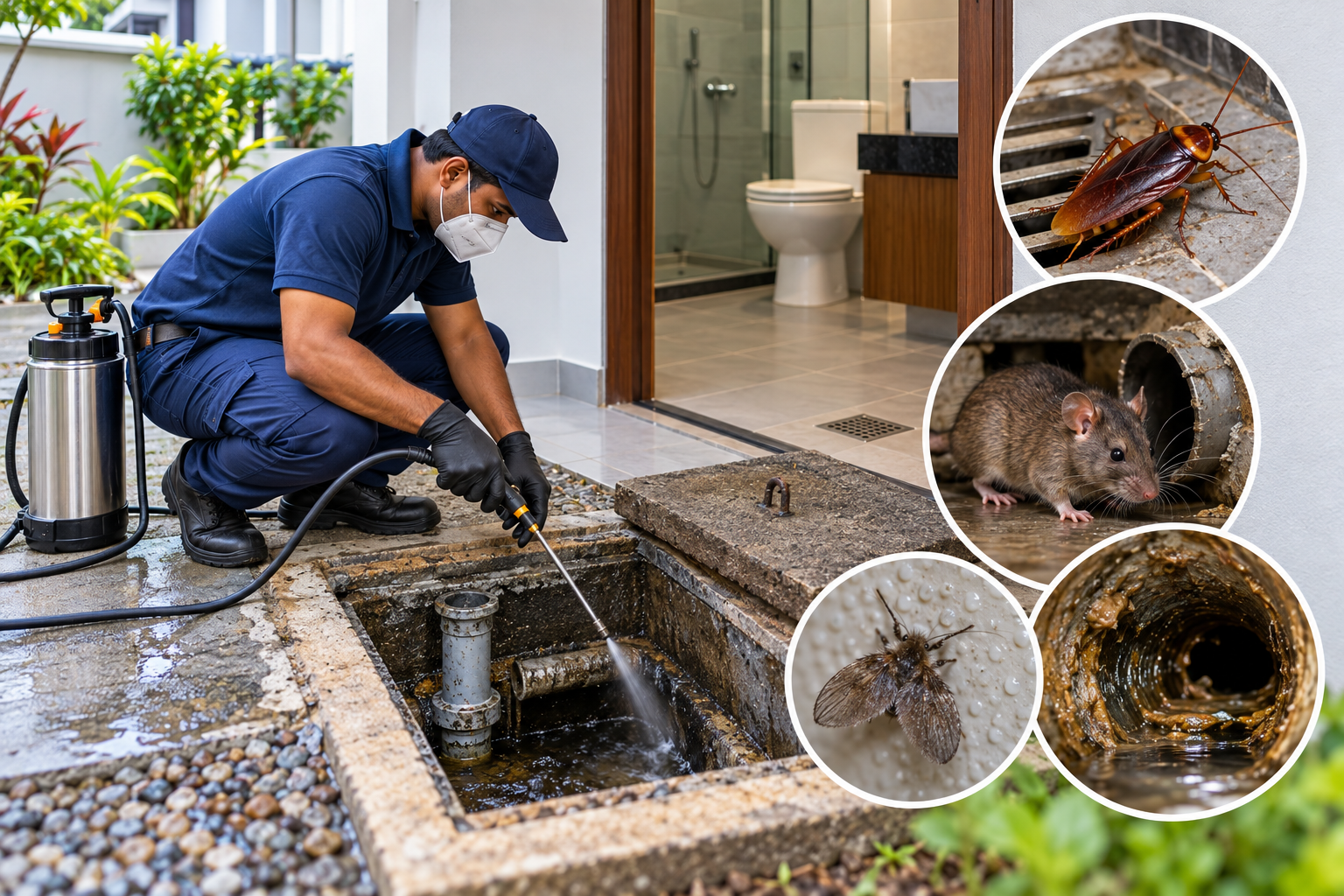
The big reddish ones are American cockroaches. Yes, the ones that fly at your face in the bathroom and make the whole house scream. These mostly come up from drains, sewer lines and the septic tank. If that’s your main headache, the fix starts outside the kitchen, and we’ve done a separate post on drainage and sewer pest treatment for exactly that.
Which one you’ve got changes the whole treatment. So when our technician comes, he looks first. Spraying comes later, if at all.
Why Kochi kitchens suit cockroaches so well
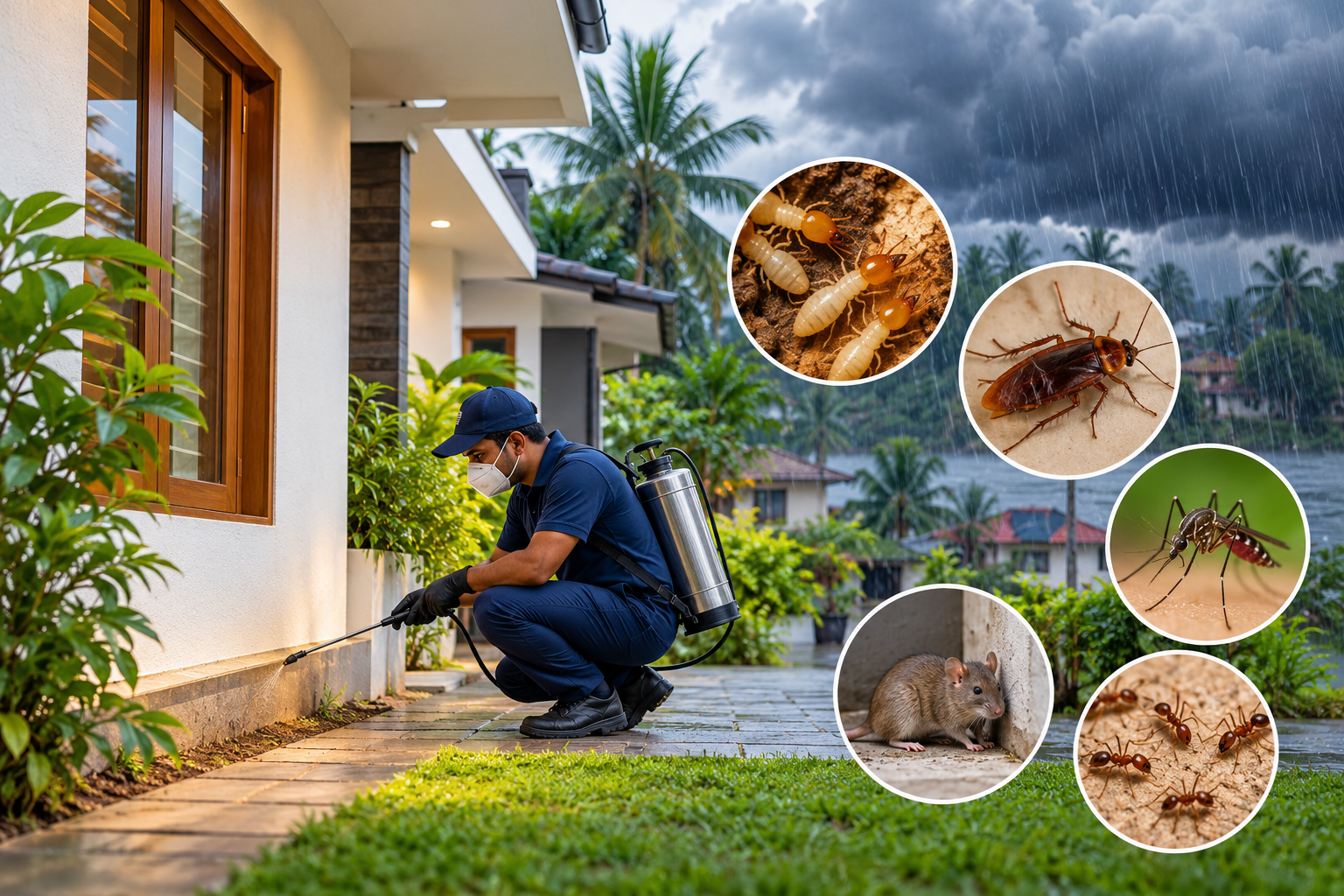
It’s not about how clean you keep things, we’ve seen spotless kitchens that were crawling with them. Our weather does half the job. It’s warm through the year, sticky, and wet for like six months. Then there’s the stuff almost every house has without thinking. A tiny leak under the sink that nobody’s noticed. Rice and atta and masala sitting in their packets. Coconut scrapings in the bin overnight. That pile of Amazon boxes on top of the cupboard (we all have one). And if you’re in a flat, the plumbing shaft. All those gaps around pipes link your kitchen up with every kitchen above you and below you.
That last bit matters more than people think. You can treat your own flat perfectly and still get fresh cockroaches walking in from next door through the duct. That’s why for bigger apartment complexes we usually tell the association, look, do all the flats together on one schedule.
What we actually do
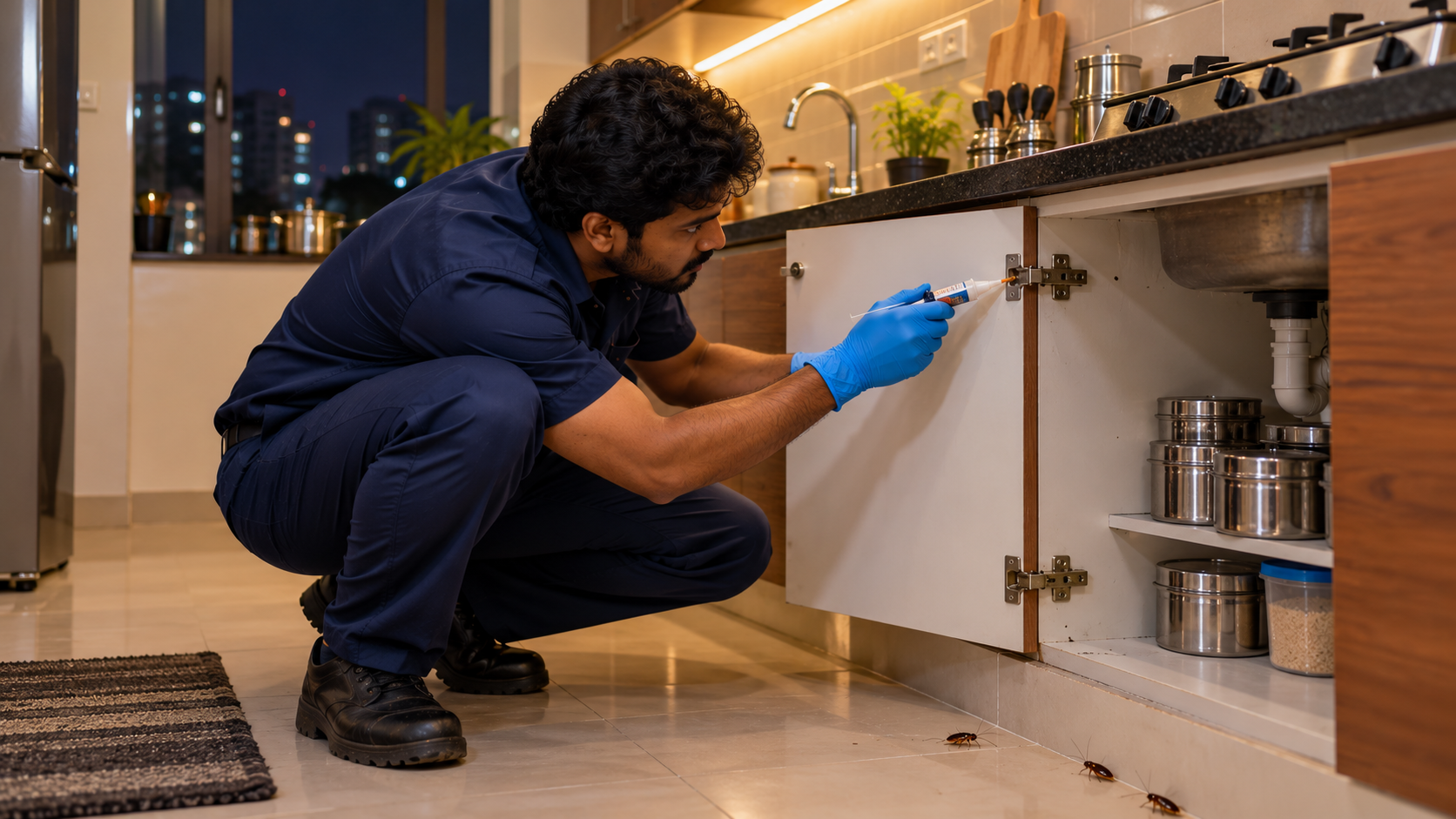
No, it’s not a fog-the-house-and-leave job. Our guy starts by poking around, behind the appliances, under the sink, in the cabinet hinges, round the stove, looking for droppings (they look a lot like ground pepper), egg cases and live ones. Then the gel goes in, tiny dots of a Central Insecticide Board-approved gel tucked into cracks and corners where they hide. They eat it, crawl back home and die there, and the others that feed on them get hit too. That’s how you finish off the colony and not just the few you happen to see. If there’s a drain issue or a heavy American cockroach problem, we might spray a few specific spots, outside or in the drains. Not your whole kitchen. Then we come back once more, because eggs that were already laid will still hatch after the first round and we want to catch that batch before it grows up and starts breeding.
The gel doesn’t really smell. You don’t need to empty the kitchen or go out for the day, most people just keep cooking like normal. We only ask you to wipe the counters before and please don’t scrub off the gel dots.
What you can do from your side
Nothing complicated here, but it really helps the treatment last. Get that drip under the sink fixed first, cockroaches need water even more than food. Shift the rice, sugar, atta and snacks into proper airtight dabbas. Take the waste out at night instead of next morning. Throw out the cardboard and the old newspaper stack, they love laying eggs in corrugated cardboard for some reason. Once a month, pull the fridge out and clean behind it, you’ll get a shock the first time. And don’t spray over the gel dots! It spoils the bait and they’ll stop eating it.
For restaurants, hotels and bakeries
If you’re running a food business in Ernakulam, cockroaches are more than embarrassing, they can fail you an inspection. We’ve worked with kitchens getting ready for FSSAI and HACCP audits and can set you up on a monthly or quarterly schedule, with service records to show the auditor. We can come after closing time so it doesn’t mess with service.
How often should you get it done?
For a normal home, one treatment plus the follow-up usually does it. After that, a check every few months stops them coming back, mainly before and after the monsoon when everything living in the drains starts hunting for dry ground. Restaurants and commercial kitchens, go monthly, it’s just easier.
Get it sorted
We’re PCCS India, doing pest control in Kerala since 2008, based out of Thrippunithura. If the cockroaches keep coming back whatever you try, give us a call for a free inspection and we’ll tell you straight which type you’ve got, where they’re coming from and what it’ll take. Call or WhatsApp 9349550599, or see our cockroach control in Ernakulam page.