Quick answer
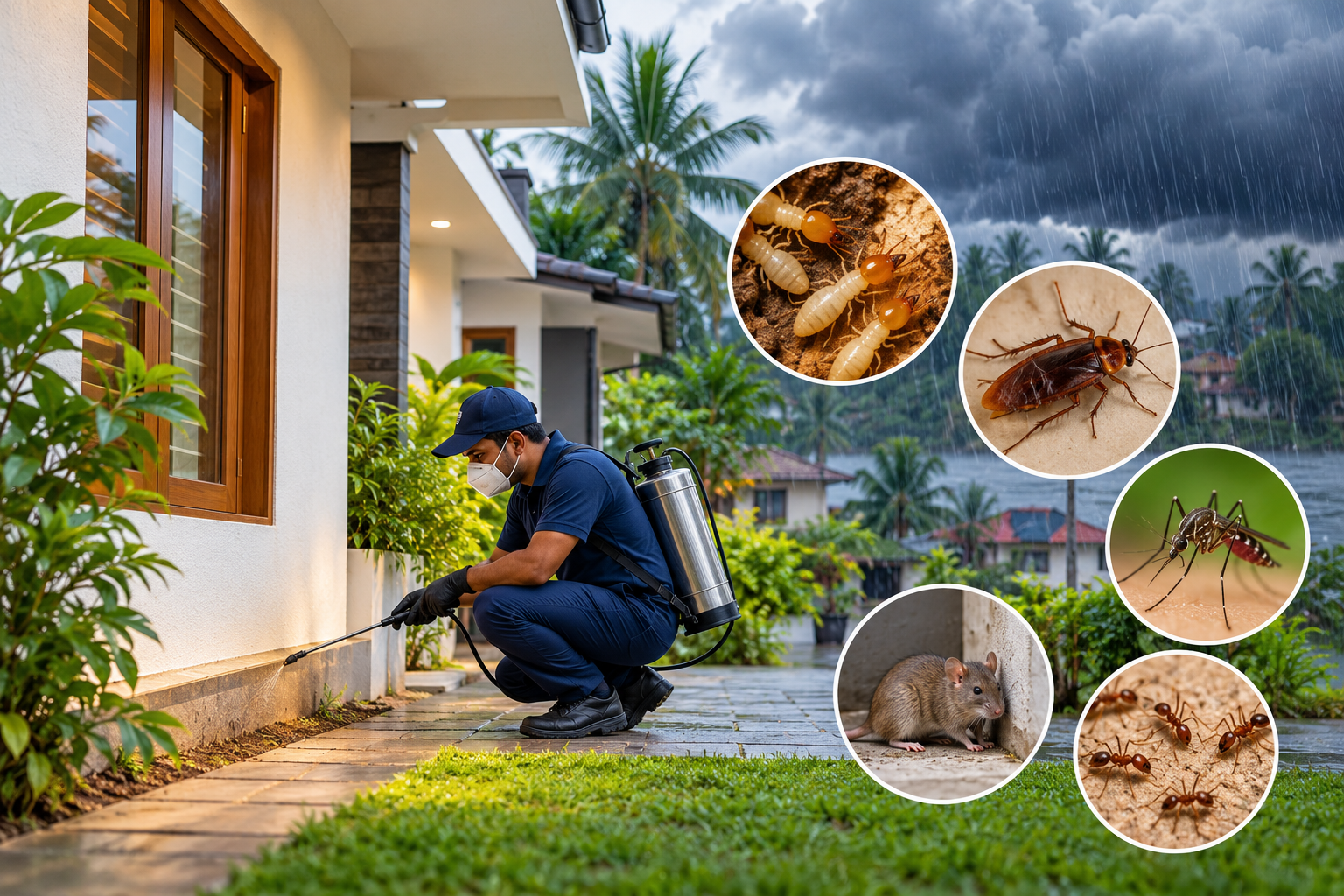
The call usually goes like this. “We’ve sprayed the kitchen three times this month and the cockroaches are still there.” Nine times out of ten, they’re coming up from the drain. That’s what drainage and sewer pest treatment is for. We go after the floor traps, the inspection chambers, the sewer pipes and the patch of ground around the septic tank, because that’s where the cockroaches, drain flies, mosquitoes and rats are really breeding. A house in Kochi needs it every three months or so. A restaurant or hostel, every month.
You’re spraying the wrong place
We hear this one a lot. “We spray the kitchen every Sunday and still they come.” And they will, because the kitchen is just where you see them. They live in the drain.
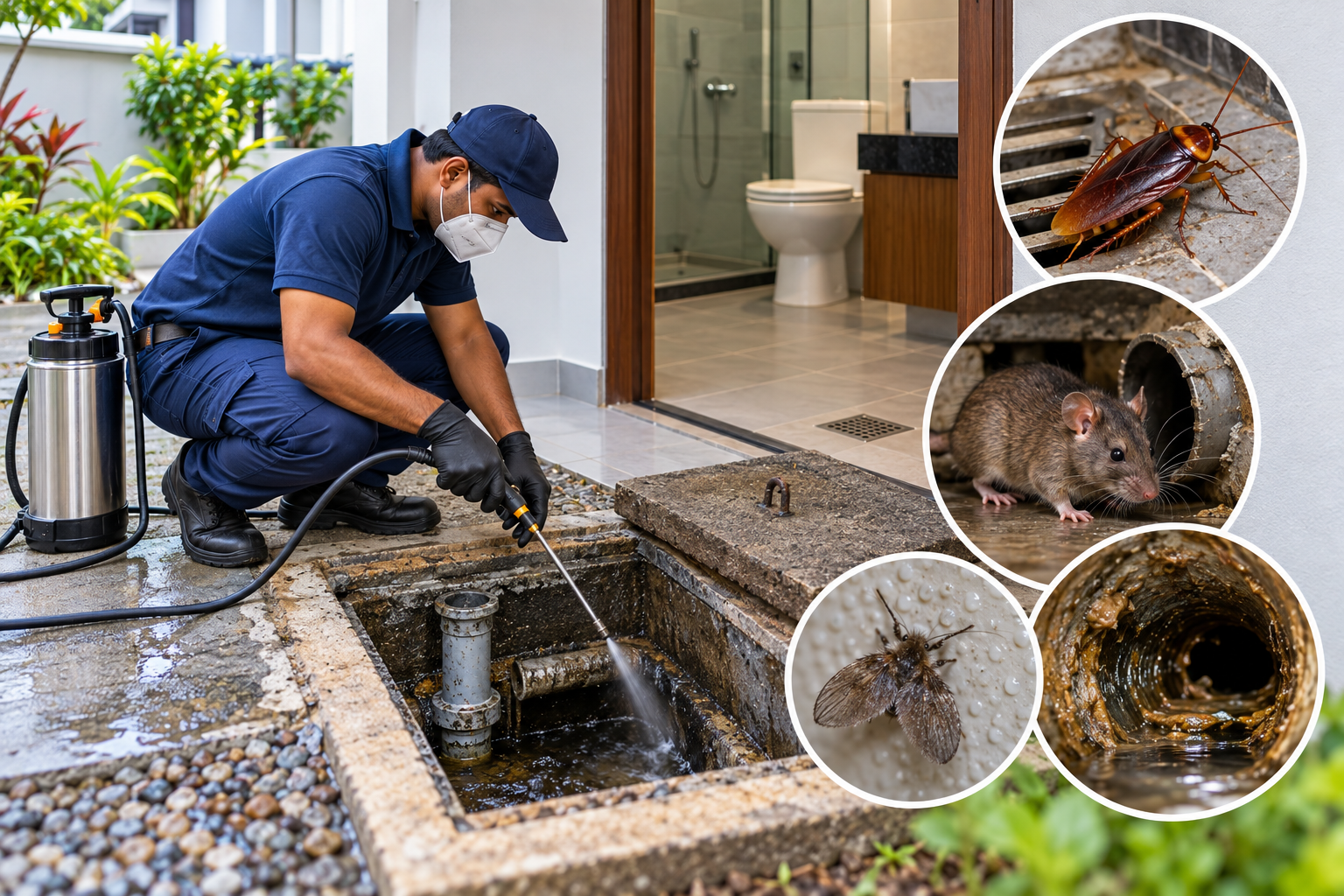
Think about a drain line from a cockroach’s point of view. Dark. Warm. Always a bit wet. And somebody keeps sending down rice, curry and coconut oil several times a day. The big reddish-brown ones you find in most Kerala bathrooms (American cockroaches, if you want the proper name) love it down there. They breed inside the inspection chambers and pipes, wait for the lights to go off, then come up through the floor trap.
Rats use the very same route. They follow sewer lines from building to building and pop up wherever a chamber cover is cracked or a pipe has a gap around it. In a flat complex, one bad chamber can supply pests to every flat on the line. Just one.
Then there are those little fuzzy flies sitting on the bathroom tiles. Most people think they’re mosquitoes, or tiny moths. They’re drain flies, and they breed in the slimy layer that builds up inside pipes. Spraying the walls does next to nothing, because the babies are inside the pipe.
How to tell the problem is coming from below
A few giveaways. Big cockroaches near the bathroom or kitchen floor trap, mostly after 10 at night. Those small moth-like flies near the wash basin. A smell from the drain that comes back even after you’ve cleaned it with everything in the cupboard. Rat droppings or a burrow near the manhole or along the compound wall. A cracked or loose chamber cover. Mosquitoes inside the house when there’s no water lying around that you can see.
Two or more of those? It’s the drain. Nearly always.
Why Kerala has it worse
Six months of rain, basically. When heavy rain fills the sewer lines, the water level climbs and pushes whatever’s inside upward and out, straight into homes. Low-lying parts of Kochi, bits of Kaloor and Edappally and the older town areas, go through this every single monsoon.
There’s a health side too, and it’s not small. Rats spread leptospirosis through their urine, and Kerala sees cases go up every rainy season. Cockroaches walk from sewage to your plate rack without wiping their feet. So keeping the drains clear isn’t only about the yuck factor.
What our team actually does
Step one is just finding everything. Sounds obvious, but most homes have more drain points than the owners know about: floor traps, a gully trap outside the kitchen, two or three inspection chambers, maybe a grease trap, and the septic tank. In apartments we go up and check the shared drain stacks too, since that’s usually where it all starts.
Then we open the chambers and spray the inside walls with a residual insecticide. That stuff keeps working for weeks, not just on the day we’re there. Floor traps and pipe mouths get a gel or foam instead, because a spray just runs off down the pipe, and the eggs and drain fly larvae are sitting right there. Any water that won’t drain gets a larvicide, so nothing breeds in it.
For rats, bait stations go along the sewer route and the compound wall. They’re locked, so children and pets can’t get into them. Before we leave, we’ll tell you about the broken covers, missing floor trap lids and pipe gaps we found. Sometimes a cheap steel mesh or an anti-cockroach floor trap does more than any chemical, and we’ll say so.
Before you ask: yes, everything we use is approved by the Central Insecticides Board. And it goes only where it’s needed, not sloshed around the whole bathroom.
Restaurants, hotels and apartment associations
A commercial kitchen sends far more oil and food down the drain than any house. Ignore the grease trap for a few weeks at a restaurant in Kakkanad or a bakery near Ernakulam North and you’ll have a proper infestation on your hands. It happens faster than owners expect.
For those places we suggest a monthly visit, with a written service record each time. That record comes in handy when FSSAI or HACCP auditors turn up, and our team has been through enough of those audits to know what they look for.
Apartment associations, one honest bit of advice. Doing one flat at a time almost never works. The cockroaches just shift next door through the common line and come back when the smell fades. Treat the whole building’s drains on the same day. It works better, and split across the flats, it’s cheaper too.
Home fixes that do more harm than good
Please don’t mix bleach with acid toilet cleaners. It gives off chlorine gas, which is a real hazard in a small closed bathroom. Don’t pour kerosene or petrol down the drain either; it’s a fire risk and doesn’t touch the eggs anyway. Boiling water poured again and again can weaken PVC joints. And don’t seal a floor trap shut for good, because the little water seal inside it is what stops sewer gas from coming into the room.
What does help is the boring stuff. Keep the floor trap covers on. Pour a mug of water into drains you rarely use, once a week, so the seal doesn’t dry out. Scrape food off plates into the bin before washing.
Questions people ask us
Why do cockroaches come out of my bathroom drain? Simple, they live down there. Pipes and chambers are where they breed, and at night they climb up looking for food. Fix the drain and you fix the cockroaches.
What are the tiny flies in my bathroom? Probably drain flies. They grow in the gunk lining the inside of the pipe. Once the pipe is cleaned and treated, they die out.
How often should drains be treated? For a house, every three months is fine. Restaurants, hotels and hostels should do it monthly; there’s just too much food going down.
Will it damage my septic tank? It won’t. We choose what goes in, and how much, with the septic system in mind.
Can you do our whole apartment building? We’d actually prefer to. We deal with associations directly and get the entire building done in one day.
Call us
If the cockroaches keep coming back whatever you spray, look under the floor. Call PCCS India on 0484 2354786, 9349550599 or 09633984599, or use our contact form. We cover Kochi, Ernakulam, Aluva, Kakkanad, Edappally, Kaloor, Thrippunithura and the areas around. Our cockroach control and rodent control pages have more detail.