
Quick answer
Getting bitten in the daytime, mostly round the ankles? Then it’s probably Aedes, the dengue and chikungunya mosquito. Here’s the thing though, they don’t travel much. If they’re biting you, they were born pretty much next door, maybe in your own backyard, in some little bit of clean water sitting where nobody looks. Fogging? It gets the ones flying that evening and that’s about it. To actually get rid of them you’ve got to find where they’re breeding and deal with that, then spray the spots where the grown ones hang about.
The afternoon bite tells you something
Most of us grew up thinking mosquitoes are a night thing, right? Light the coil, switch on the liquid machine at seven, done. But if you’re sitting on the sit-out at four in the evening and your legs are getting eaten, that’s a different mosquito. The striped one. Black, with little white marks on the legs.
And that matters, because it changes where you go looking. The night-biting Culex type breeds in dirty drains and canals, so honestly a lot of that is out of your hands. Aedes is fussier. It likes small amounts of clean water. A bucket on the terrace. That tray under the flower pot. A coconut shell lying behind the house after the rain. Very often, it’s your own compound.
Where we keep finding them
After years of going round houses, the same spots keep turning up, and a couple of them surprise people every time. Coconut shells and husks lying around after rain, that’s the classic. If you’ve got a few rubber trees, or live near a plantation, check the latex cups, they’re a well-known dengue hotspot in central Kerala. Inside the house it’s the flower pot trays and the money plant bottles. Then there’s the fridge, the defrost tray at the back. Nobody ever checks that one. The AC drip filling up a bucket or sitting on the sunshade. That old drum by the well with the lid half off? Yep. And the roof gutter that’s been blocked with leaves since last Onam, or that low corner of the terrace that’s always got a puddle. Old tyres, broken pots, the plastic covers you kept for later. And if there’s a construction site next door, the curing water and the lift pit.
In our kind of heat an Aedes mosquito can go from egg to adult in roughly a week. So even water that stands for a few days after a shower is plenty.
Why fogging alone won’t do it
The minute there’s a dengue case on the street, everybody wants fogging, and we get it. You see the smoke, it feels like something’s being done. And yes, it does knock down the adults that happen to be flying at that moment. But it doesn’t touch the larvae sitting in your fridge tray, or the eggs stuck to the inside of that bucket. A week later, there’s a fresh lot.
That’s why our mosquito control treatment goes after both stages.
What a proper treatment looks like
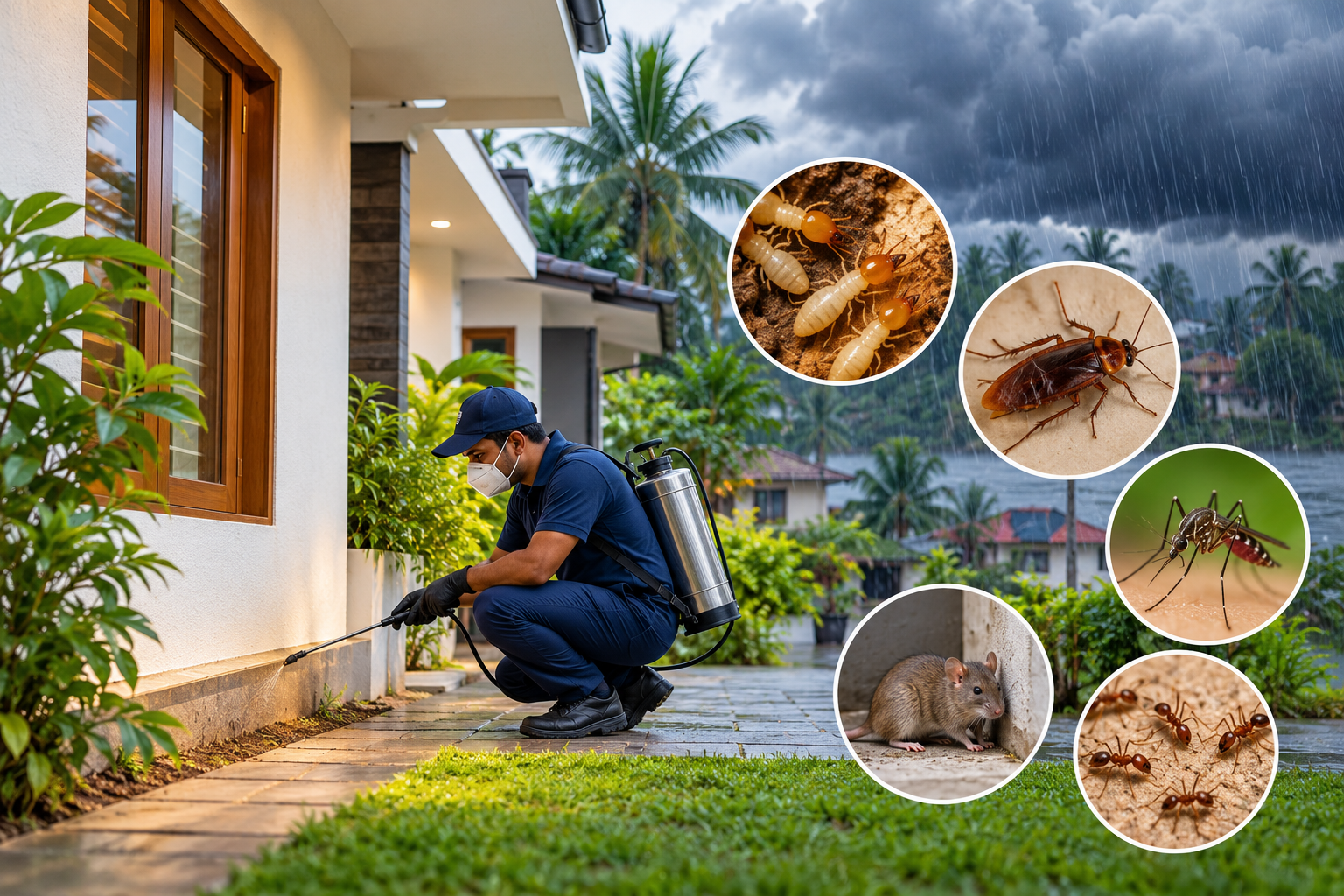
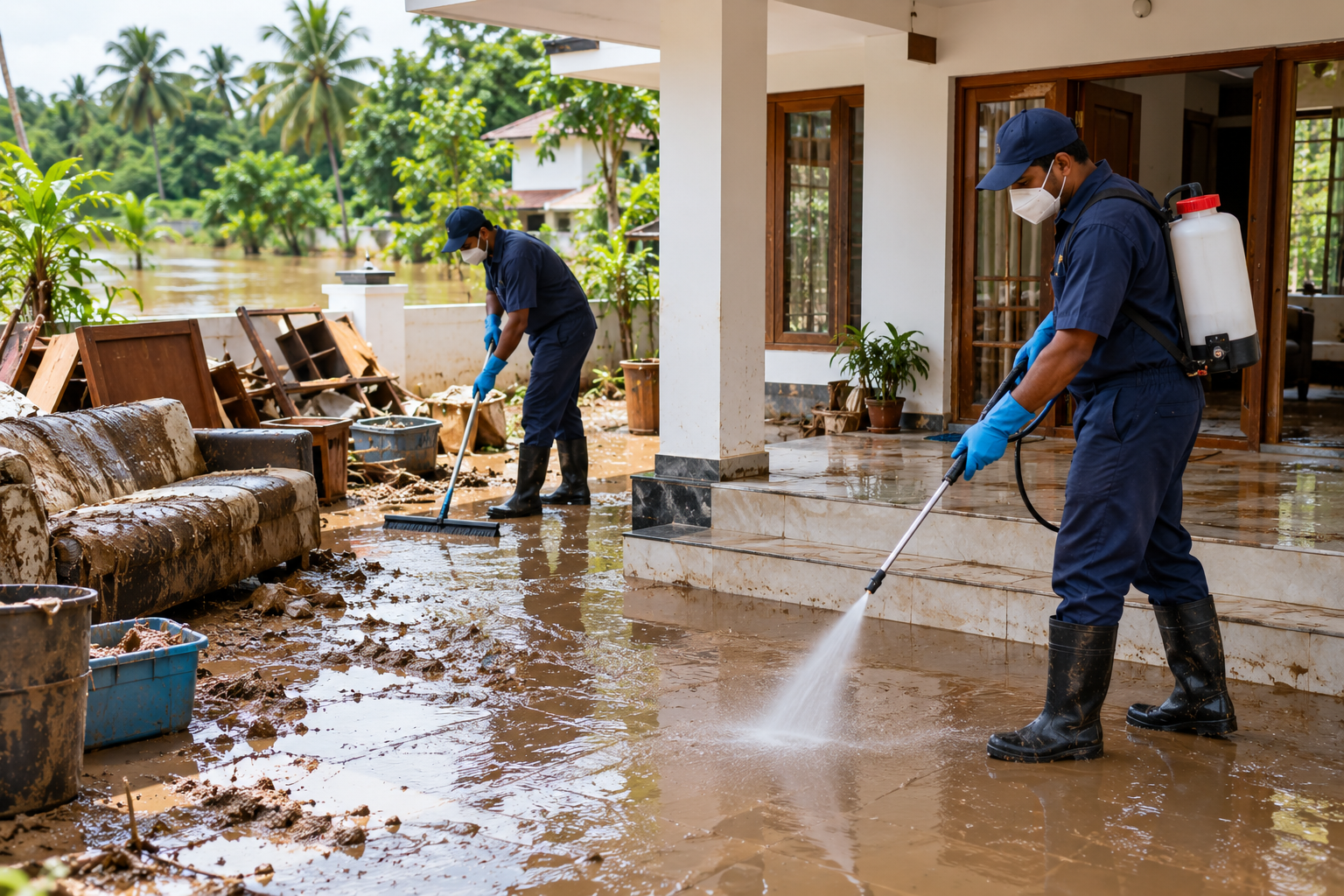
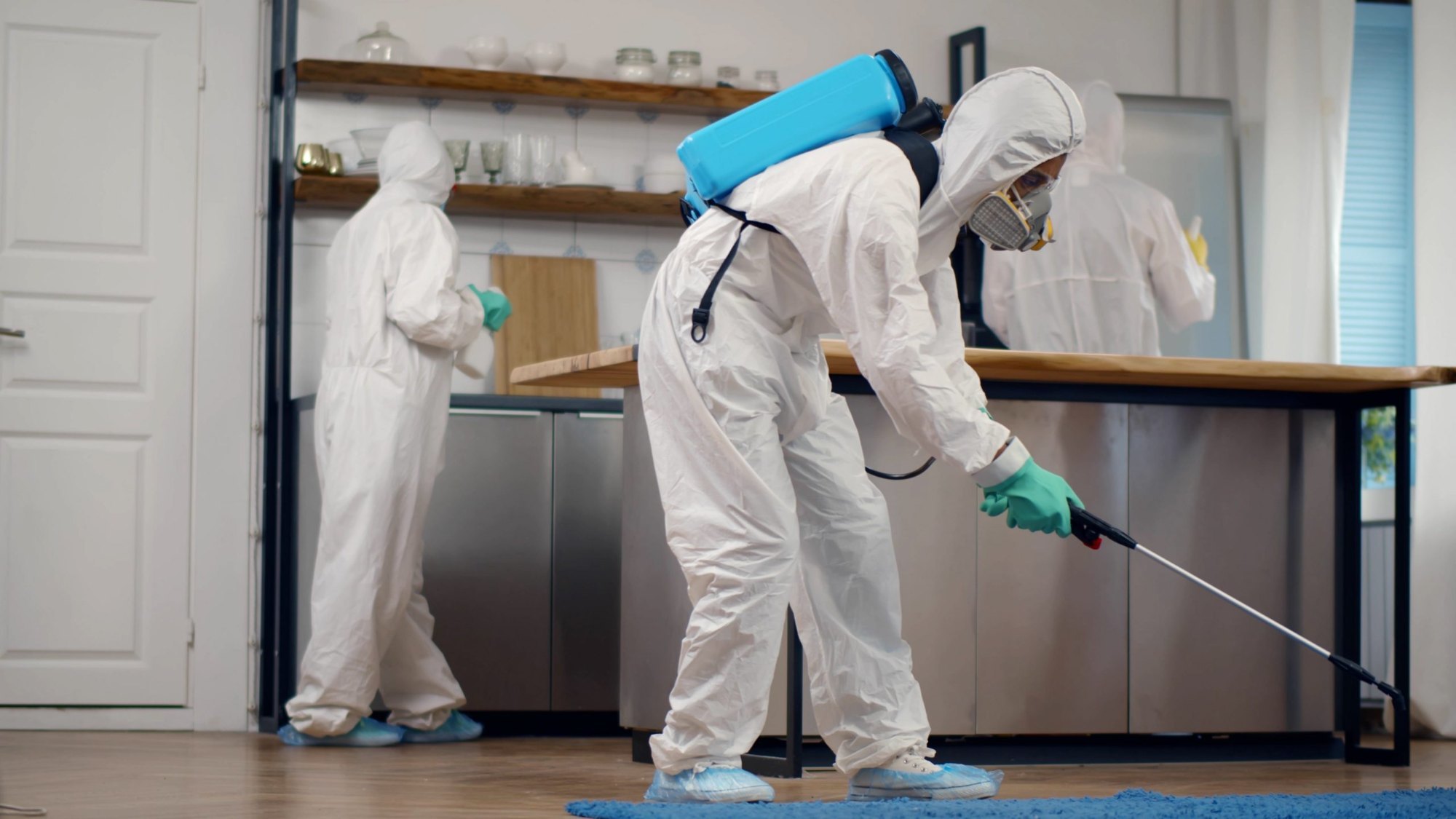
Our technician starts with a walk around the house, the terrace and the compound, looking for breeding water and larvae, and we’ll actually show you what we find. Anything that can be emptied, we’ll ask you to empty. Water you can’t get rid of, a drain or a tank you use, gets an approved larvicide so the larvae never make it to adults. After that it’s the grown-ups’ turn. During the day they hide wherever it’s dark and a bit cool, so under the sofa, behind the curtains, in the hedge, under the sunshade. We hit those spots with a residual spray that stays active for weeks. Got a big compound, or live in a big apartment block, or had a dengue case down the road? Then we’ll fog or mist outside too, on top of everything else. And through the rainy months we keep coming back on a schedule, because one visit in July isn’t going to carry you to December.
We only use Central Insecticide Board-approved products. You’ll just have to keep out of the sprayed rooms for a little while and keep the kids and pets away till it’s dry.
Your weekly dry day
The health department has been pushing the dry day idea for years now and honestly it’s the single most useful habit going. Pick a day, Sunday suits most families, and give it fifteen minutes. Go round with a bucket and tip out everything, the pot trays, the dog’s bowl, whatever’s collected rain since last week, and give them a scrub because the eggs stick to the sides. Fridge tray too, don’t forget that one. Any coconut shell or tin lying in the yard, flip it or bin it. If it rained, pop up to the terrace and peek at the gutters. Tanks and drums, lids on properly. Change the water in the money plant bottles.
Do that alongside a proper treatment and you’ll feel the difference in a couple of weeks.
For apartments, schools and offices
Mosquitoes don’t care about flat numbers. If one balcony on the third floor has a tank full of larvae, the whole building pays for it. We work with apartment associations, schools and offices around Ernakulam and Kochi on scheduled treatments covering the terraces, parking, drains and common gardens. Works much better than every family doing their own thing.
When to book
Best time is just before the monsoon, May ideally, and again around September before the thulavarsham rains. That’s why mosquito control is part of our pre-monsoon preventive package. But if you’re getting bitten right now, don’t wait for a better month.
PCCS India has been doing pest control in Kerala since 2008. Call or WhatsApp 9349550599 for a free inspection and we’ll help you track down where they’re coming from.
One last thing. If anyone at home has a high fever, body ache, pain behind the eyes or a rash, please go see a doctor. Don’t wait it out.